
Apple put a language model in every new iPhone. Here's what it's good for
What Apple's on-device model did well in Routine Run, where it failed quietly, and the test that keeps a prompt and its parser from drifting apart.
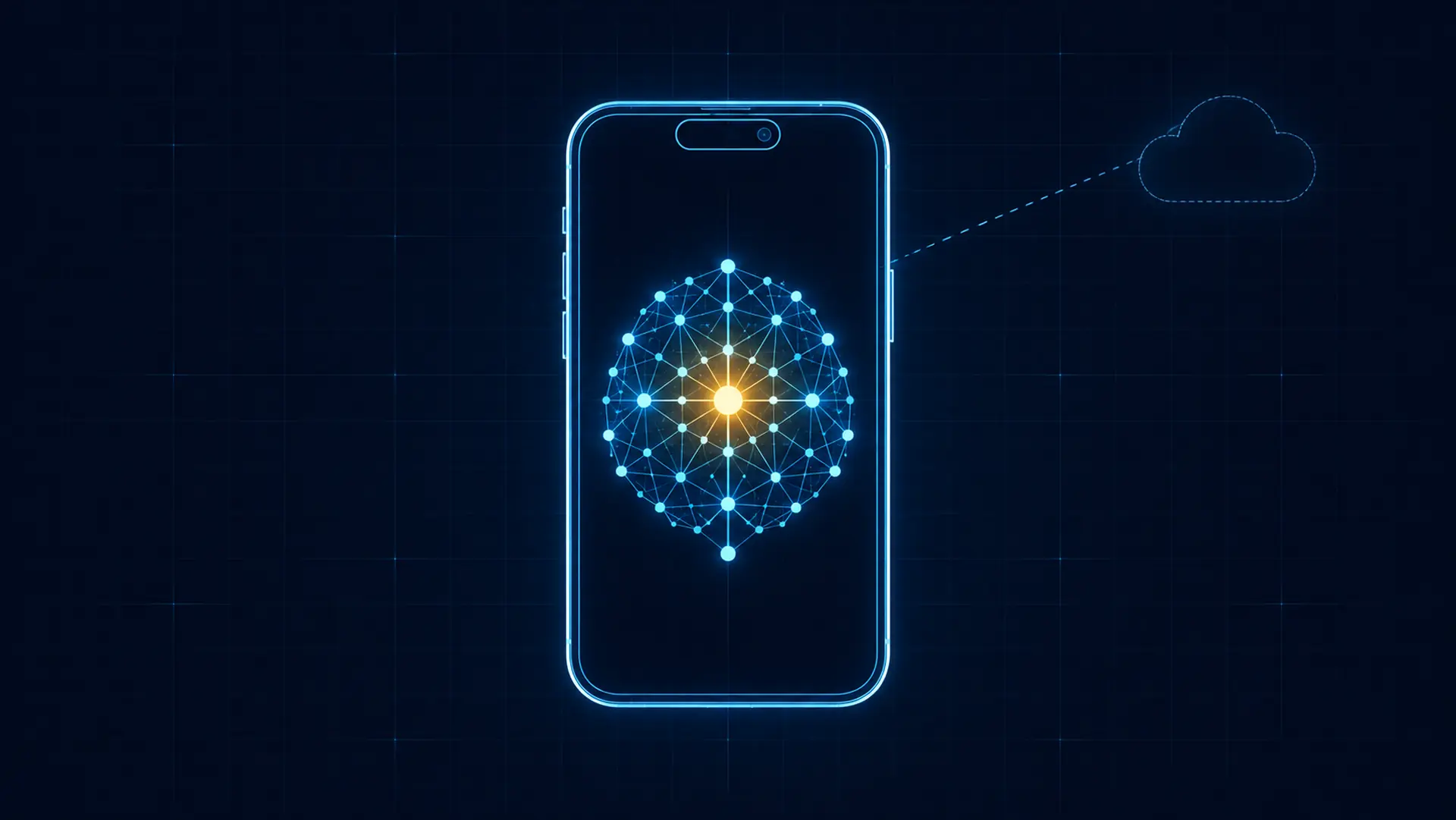
Writing a routine by hand is the reason most people never write one. So the first screen of Routine Run takes a sentence instead, and Apple's own model turns it into steps.
That model runs on the phone. No account, no server of ours, no bill per request, and it works in airplane mode. On iOS 27 a bigger version runs on Apple's Private Cloud Compute when the phone's model isn't enough. For an app that promises "private by default", this changes what is affordable: an AI feature that used to need a backend, an API key and a privacy page now needs none of them.
What it did well
Writing something new from one sentence. "Morning before a flight" comes back as a sensible list of steps with times, in the shape the app expects. Short, structured generation from a clear request is where a small model shines.
Where it failed, quietly
Asked to change an existing routine, it mixed up steps in ways that were hard to notice. Nothing crashed. A step moved, a time shifted, and the result still looked like a routine.
That is the dangerous kind of failure: plausible. So on the phone, the model writes new routines only, and changes go to a bigger model. We didn't decide that from a benchmark. We decided it from watching our own task fail.
Keep the prompt and the parser in one place
The prompt that asks the model for a routine is built from the same type that reads the answer back. And one test takes every example in the prompt and checks that it reads back into a routine.
That test doesn't judge the model. It stops a quieter bug: someone edits the prompt's example, the parser no longer accepts that shape, and the model starts producing answers the app throws away.
If you're adding it to your app
- Pick tasks that are short and structured: write, sort, extract, rename, summarise.
- Test your own task, with your own data, before choosing between the phone, Private Cloud Compute and a bigger model.
- Design the fallback first. Phones without Apple Intelligence should get a working screen, not an empty one.
- Watch for plausible failures. Measure what changed, not only whether something came back.
What would your app do differently if every request to a model cost nothing?
Prema Vision designs and builds AI systems for companies, takes them to production, and keeps a person on them after launch.
More notes
Let AI assistants into your product without handing them the keys
How Routine Run's MCP connector lets Claude read runs and act, while every change a model writes waits for a person to approve it on the phone.
Our AI interview was losing facts clients gave it. 18 of 19 came back
Three fixes from the Structed AI interview: a safety net that matched the wrong thing, a question asked until the turn limit, and a trace lookup that made replies take a minute.